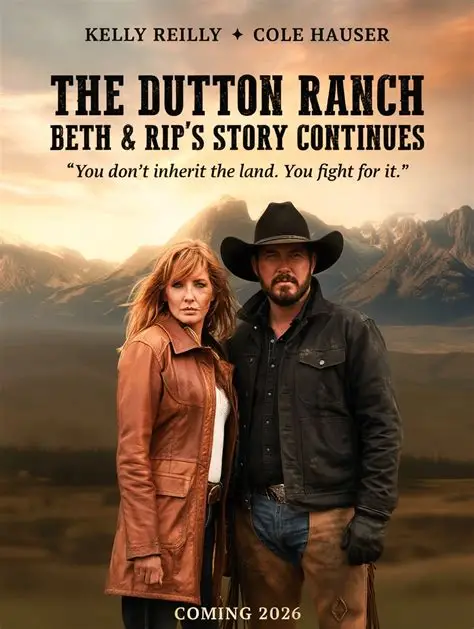
At its core, THE DUTTON RANCH — BETH & RIP’S STORY CONTINUES is not a Western. It is a love story—one forged through violence, sustained by loyalty, and threatened by change.
Beth Dutton and Rip Wheeler are not romantic ideals. They are survivors who learned to love inside a war zone. When the war ends, their relationship becomes the most dangerous terrain they must navigate.
A Love Born in Blood
From the beginning, Beth and Rip’s bond was defined by extremity. Their love thrived under pressure, strengthened by shared enemies and mutual destruction. In The Dutton Ranch, that pressure disappears—and with it, the structure holding them together.
The series dares to ask a question few franchise continuations attempt: What happens to love when survival is no longer the goal?
Beth and Rip must learn intimacy without crisis. And neither of them knows how.
Beth: Vulnerability as the Ultimate Risk
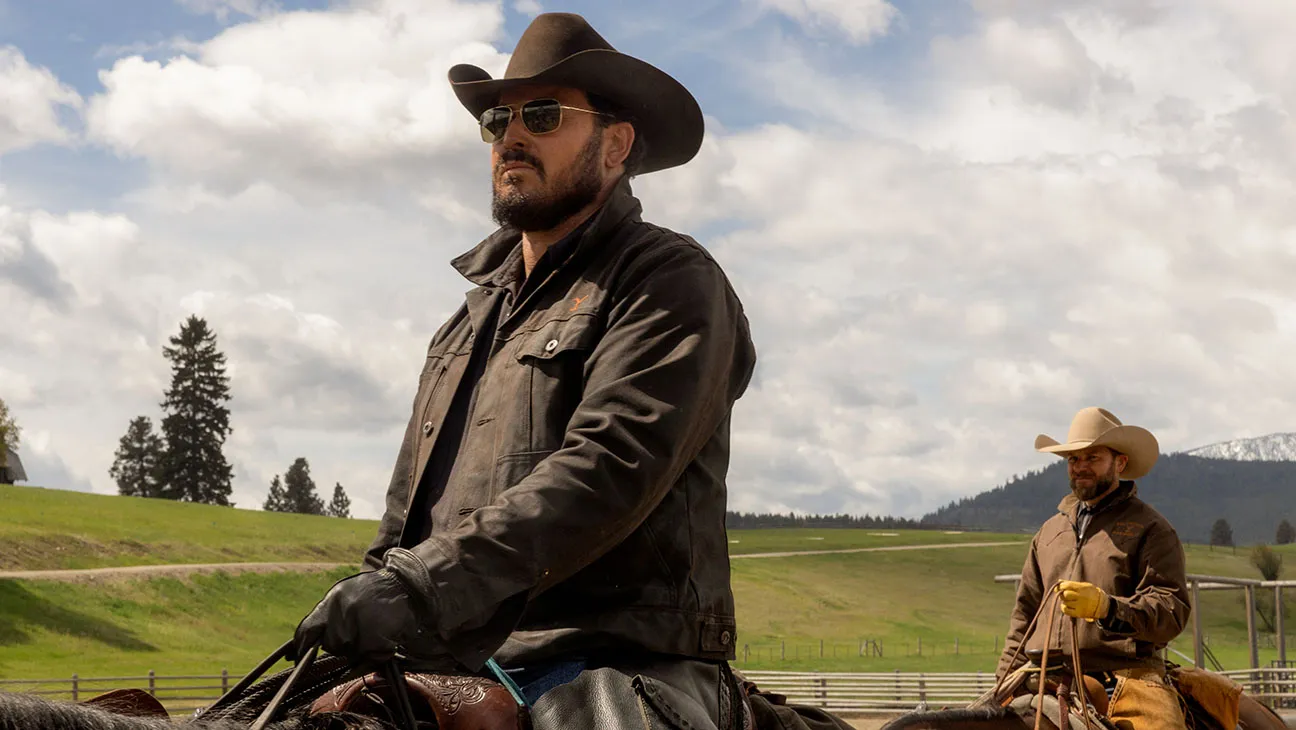
Beth’s greatest fear has never been death—it is vulnerability. In The Dutton Ranch, emotional exposure replaces physical danger as her primary threat.
Kelly Reilly plays Beth with a raw restraint that redefines the character. Her silences speak louder than her explosions. Love, for Beth, is not comfort—it is surrender. And surrender feels indistinguishable from defeat.
The series does not soften Beth. Instead, it allows her contradictions to exist unapologetically. She wants connection but fears dependence. She desires family but distrusts permanence.
Rip and the Burden of Stability
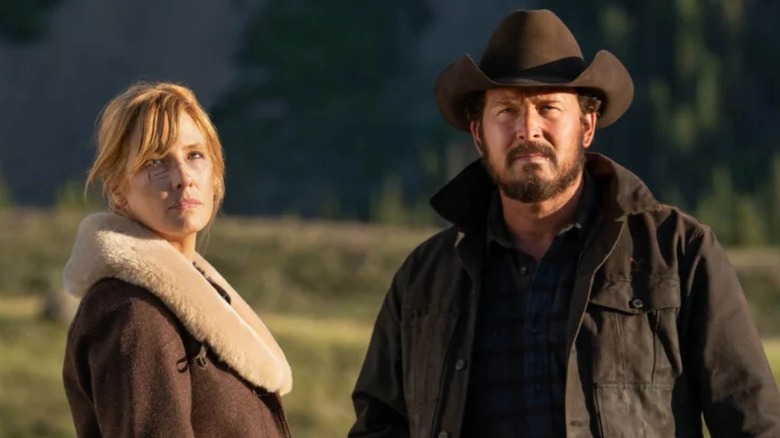
Rip, by contrast, longs for structure. Stability represents safety, something he never had as a child. Owning land, raising Carter, and building a home are acts of resistance against his past.
But stability comes with expectations—communication, patience, compromise. These are skills Rip was never taught.
The Dutton Ranch portrays masculinity not as dominance, but as adaptation. Rip’s evolution is quiet, painful, and deeply human.
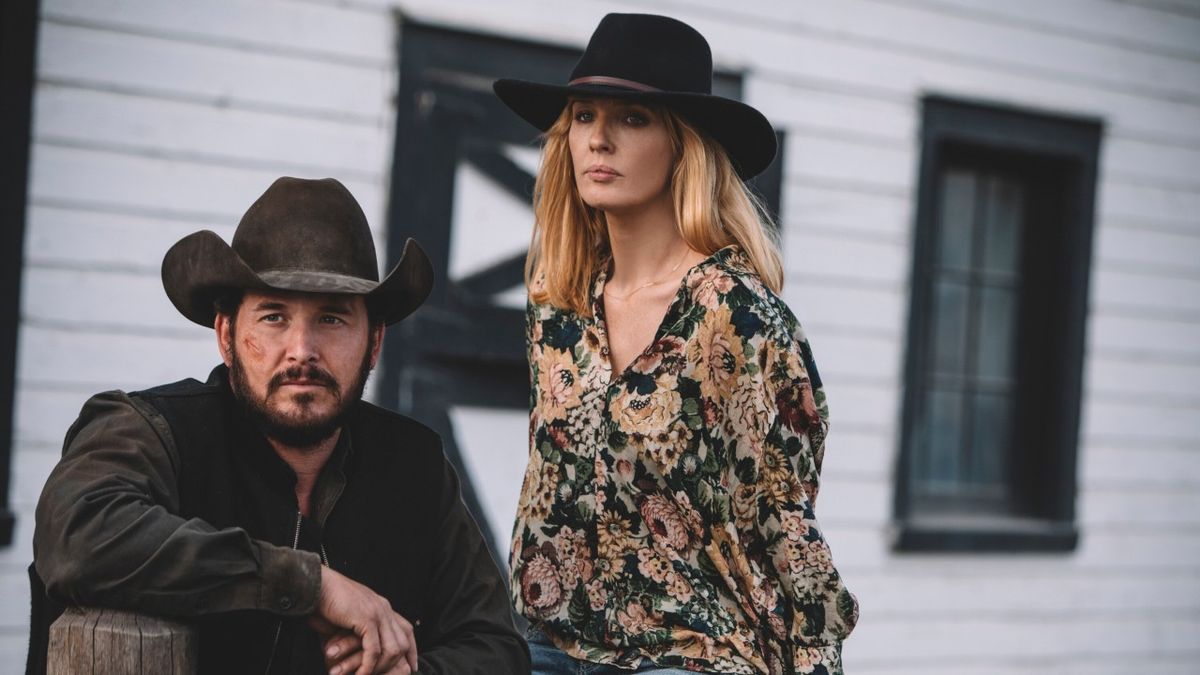
The Ranch as a Marriage
The ranch itself functions as a metaphor for Beth and Rip’s relationship. It requires constant maintenance, negotiation, and sacrifice. Ownership does not guarantee permanence.
Every external threat—developers, political forces, environmental pressure—mirrors the internal strain between them. The land demands cooperation, just as love does.
A Western About Emotional Survival
What makes The Dutton Ranch compelling is its refusal to escalate conflict artificially. The tension is internal, psychological, and intimate. Violence exists—but it is no longer glorified.
Instead, the series explores emotional survival: how people unlearn brutality, how trust is rebuilt, and how love evolves when it is no longer fueled by adrenaline.
Conclusion
THE DUTTON RANCH — BETH & RIP’S STORY CONTINUES (2026) is a mature continuation of the Yellowstone legacy—one that trades spectacle for introspection.
It is a story about love that survives the battlefield but struggles in peace. About land that outlives its owners. And about the quiet violence of change.
In a genre obsessed with legacy, The Dutton Ranch dares to suggest something radical: sometimes, survival is not enough—you must also learn how to live.