What Happens When the Night Stops Saving You
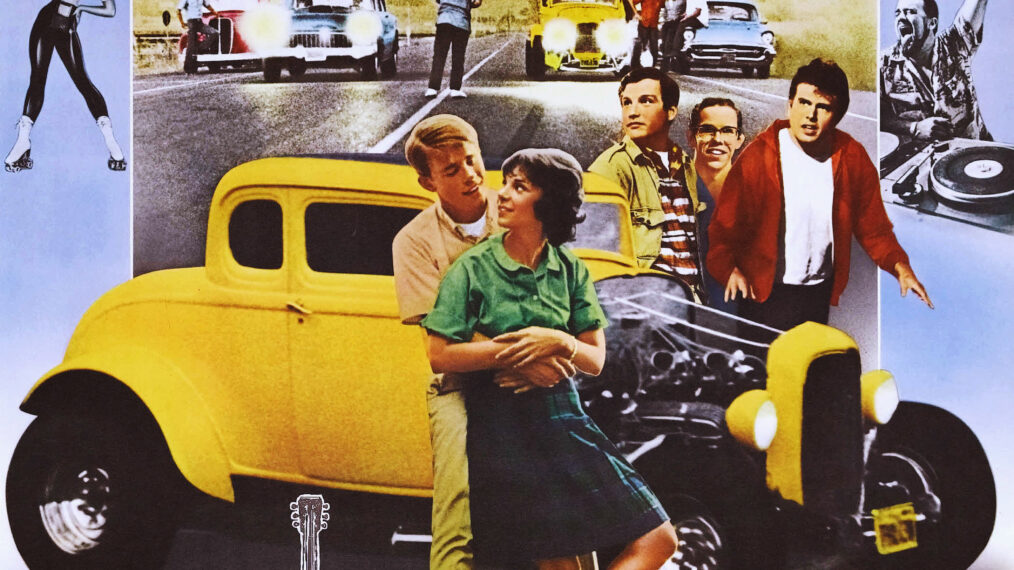
For decades, American Graffiti has been remembered as a celebration of youth—cars rolling endlessly through glowing streets, music pouring from open windows, laughter drifting into the warm California night. But beneath that surface was always something quieter, heavier, and far more honest: the fear of what comes next.
American Graffiti: After the Lights Go Out (2026) explores that fear directly.
This imagined sequel doesn’t begin with excitement. It begins with exhaustion. Not just personal exhaustion, but cultural exhaustion—the feeling that an entire generation is running on memories, momentum, and borrowed hope.
This is the American Graffiti story told after the myth wears thin.
A Night Without Illusions
The film is set, once again, over a single night—but unlike the original, this night is not romanticized.
Streetlights flicker.
Music cuts out unexpectedly.
Phones lose signal.
Conversations trail off unfinished.
The town feels suspended between what it used to be and what it has failed to become.
In 2026, Modesto is not struggling dramatically—it is quietly declining. And that quiet is what makes it unsettling.
After the Lights Go Out asks a daring question:
What happens when the night no longer feels like escape?

The End of Cruising Culture
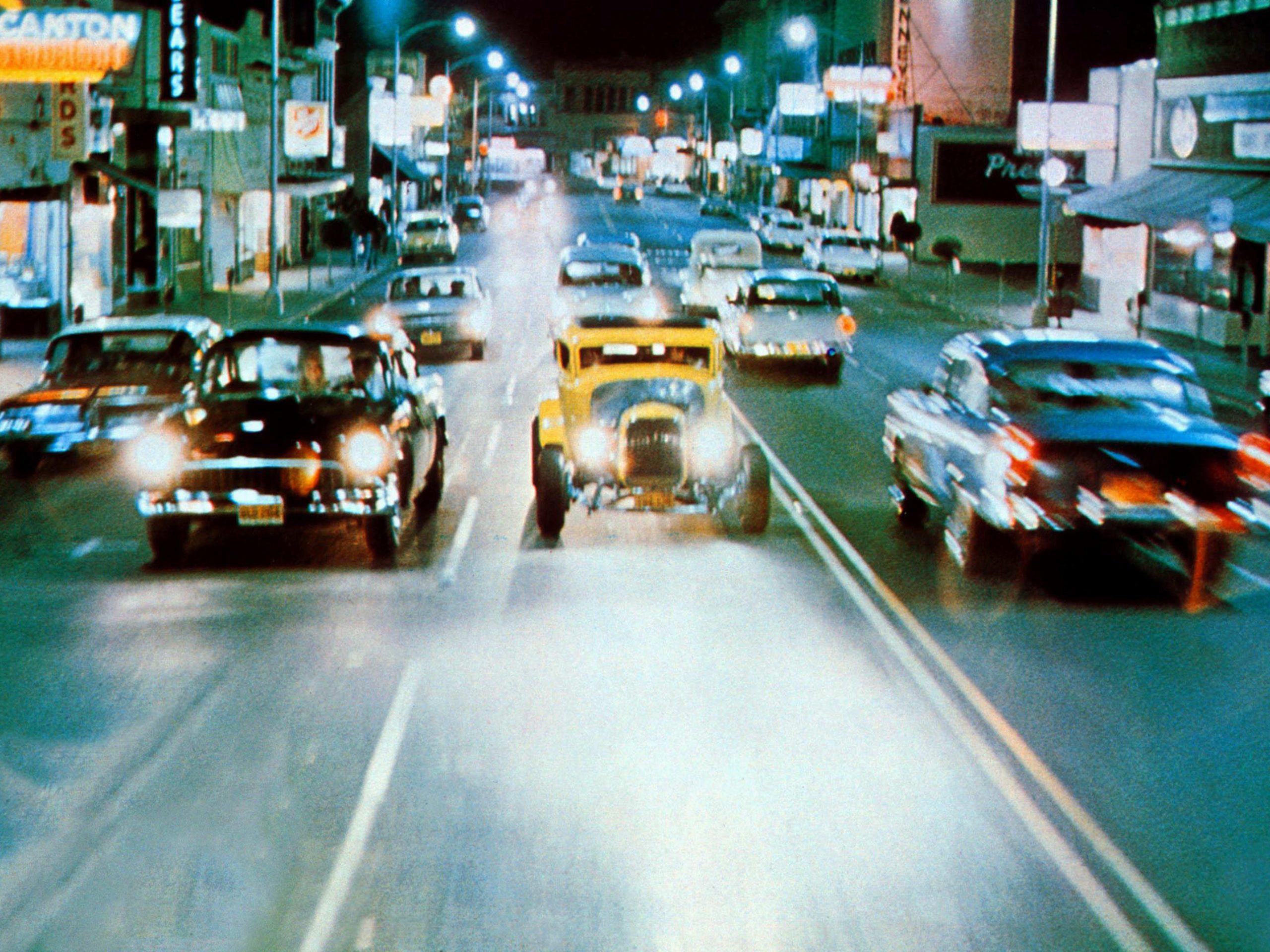
In the original American Graffiti, cruising was freedom.
In this sequel, cruising is habit.
Young characters still drive aimlessly, but not because they feel limitless—because they feel stuck. The roads are familiar to the point of suffocation. Every turn leads somewhere already known.
The film uses this contrast intentionally. Cars no longer symbolize rebellion; they symbolize avoidance.
People drive not to arrive—but to delay.
A Generation Raised on Echoes
The younger characters in After the Lights Go Out have grown up hearing stories about how things used to be better, freer, simpler.
They inherited:
-
Old songs with heavy expectations
-
Stories about “real” youth they feel unable to replicate
-
A cultural memory they didn’t help create
This creates a subtle generational tension—not anger, but disconnection.
They are told to cherish freedom, but they inherited debt.
They are told to dream, but they fear instability.
They are told to leave town, but nowhere feels guaranteed anymore.
The film treats this generational weight with empathy, never blame.
Characters at the Breaking Point
The Dropout Who Stayed Silent
A former top student who quietly dropped out of college and never told anyone. This night forces them to confront the lie they’ve been living—and the shame attached to it.
The Influencer Who Feels Empty
A local internet personality livestreaming their night, desperate to feel something real while performing authenticity for strangers.
The Veteran of Too Many Goodbyes
An older character who watched friends leave, towns change, and dreams erode—now realizing that endurance isn’t the same as fulfillment.
The Teen Who Wants to Burn It All Down
Not literally—but emotionally. Angry at being told to wait, to be patient, to understand a system that no longer seems to work.
Their paths cross not through coincidence, but inevitability. When a place grows small enough, everyone eventually runs into everyone else.
Silence as Storytelling
One of the boldest choices in After the Lights Go Out is its use of silence.
Music fades more often than it plays.
Scenes linger after dialogue ends.
Characters sit together without speaking.
The film trusts silence to say what words cannot:
-
Disappointment
-
Fatigue
-
Fear of repeating the past
This restraint gives the story a rawness that feels deeply contemporary.
The Collapse of the American Night
Traditionally, the night in American cinema is freedom—when rules loosen and possibilities expand.
This film subverts that idea.
The night here is heavy. Not dangerous, but suffocating. A place where unresolved thoughts grow louder.
The film suggests that the American night has changed because the American promise has changed. The illusion of endless opportunity no longer holds everyone equally.
Yet—crucially—the film does not fall into despair.

Small Acts of Rebellion
Instead of grand gestures, After the Lights Go Out focuses on small, human rebellions:
-
Telling the truth for the first time
-
Turning off a camera instead of recording
-
Staying when leaving would be easier
-
Leaving when staying would mean disappearing
These moments are quiet, almost invisible—but deeply radical in a world that demands constant performance.
Visual Language: Darkness with Intention
Visually, the film leans into darkness—not stylized, but natural.
Streetlights cast uneven shadows.
Faces are half-lit.
Reflections distort rather than clarify.
The camera rarely rushes. It observes, allowing discomfort to settle. This visual language reinforces the film’s central idea: clarity does not arrive all at once.
A Film About What Comes After Nostalgia
Perhaps the most important contribution of After the Lights Go Out is its refusal to rely on nostalgia as comfort.
It respects the past—but does not worship it.
The film acknowledges that while earlier generations found freedom in motion, today’s youth are searching for stability, meaning, and honesty.
It argues that every generation must redefine freedom for itself.
Dawn Without Resolution
As the night fades, no single moment ties everything together.
There is no speech.
No revelation.
No triumphant ending.
Instead, there is morning.
Characters separate.
Some roads feel clearer.
Others remain uncertain.
But something has shifted. Not externally—internally.
The lights go out.
The streets empty.
Life resumes.
And that, the film suggests, is the most honest ending of all.
Why This Sequel Matters
American Graffiti: After the Lights Go Out (2026) is a film about the emotional aftermath of myth.
It is for audiences who love the original—but are ready to move beyond idealization.
It recognizes that:
-
Youth today is not less meaningful—just more complicated
-
Nostalgia can inspire, but it can also trap
-
And growing up in America has never been easy—only different
Final Note
This imagined sequel completes a thematic trilogy:
-
1973 — the dream
-
2026 — the reckoning
-
The future — still unwritten
After the Lights Go Out doesn’t try to answer what comes next.
It simply sits with the question—long enough for audiences to recognize it as their own.