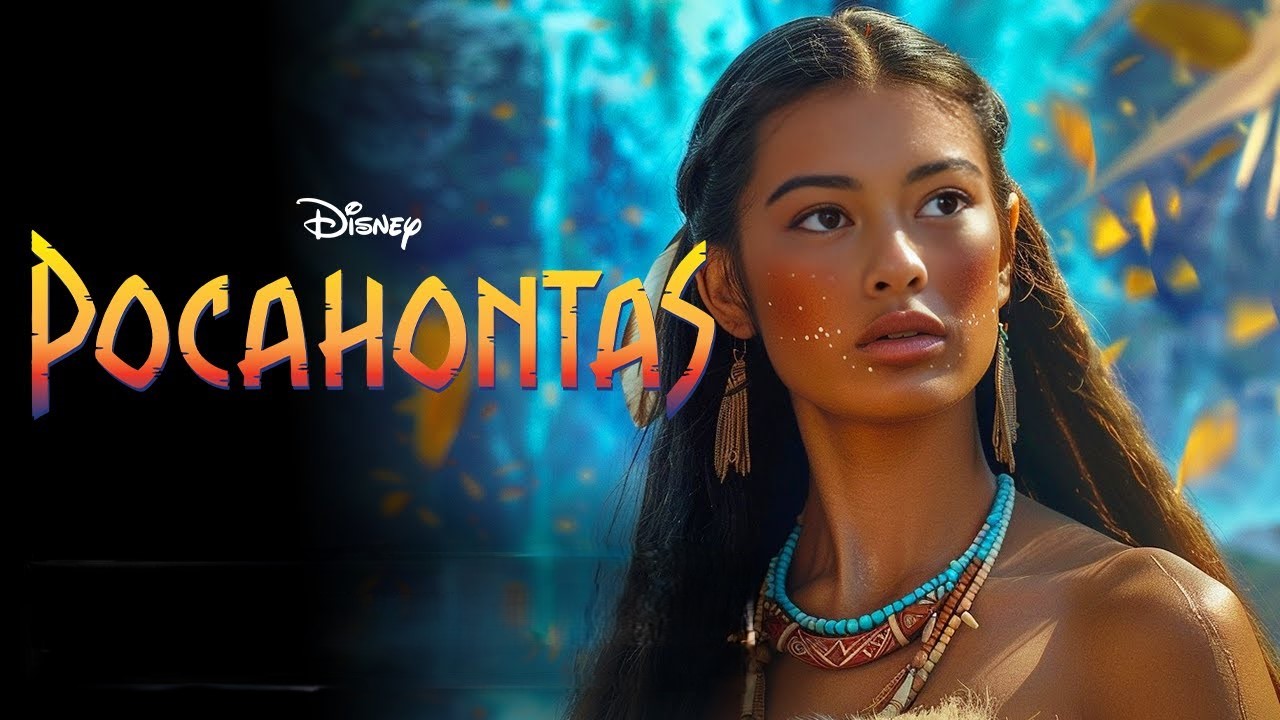
If Pocahontas Live-Action (2026) were a real film, its marketing campaign would stand apart from traditional studio remakes. Rather than leaning on nostalgia or familiar imagery, the promotional strategy would aim for restraint, signaling early that this version tells a different kind of story.
The studio would understand that expectation management is critical. This is not a musical. It is not a romance. It is not a celebration. It is a reflection.
A Trailer That Withholds More Than It Reveals
The first teaser trailer would likely be under ninety seconds. Dialogue would be minimal. There would be no narration explaining the plot.
Instead, the trailer would rely on visual contrast:
-
Dense forests cut by arriving ships
-
Quiet communal life interrupted by distant sounds
-
Close-ups of faces watching rather than speaking
Pocahontas would appear mostly in silence. Her gaze would carry weight, suggesting thought rather than reaction. John Smith’s presence would feel temporary, framed as an outsider in every scene.
The trailer would end not with a dramatic line, but with a pause—perhaps the sound of wind moving through trees. This choice would reinforce the film’s emotional tone and psychological depth.

Poster Design and Visual Messaging
The official poster would avoid bright colors and familiar symbols. There would be no romantic pose. No raised weapons. No heroic stance.
Instead, Pocahontas would be shown in profile or from behind, facing the landscape. Her figure would blend into the environment rather than dominate it.
This imagery would communicate a key theme: belonging over possession.
Marketing materials would emphasize atmosphere over story, encouraging audiences to approach the film with curiosity rather than expectation.
Audience Psychology and Emotional Preparation
The marketing would do something rare—it would prepare viewers emotionally rather than excite them.
By withholding action and music, the campaign would set a slower rhythm. This helps audiences adjust their mindset before entering the theater.
Viewers would understand that the film asks for patience, attention, and reflection. As a result, those who choose to watch it would arrive ready to engage with its deeper meaning.
This strategy would likely reduce mainstream hype but increase meaningful engagement.

Silence as a Psychological Tool
One of the most effective elements of Pocahontas (2026) would be its use of silence. Silence becomes a character in the film.
Moments without dialogue allow tension to build naturally. They force the audience to sit with discomfort rather than escape it.
Psychologically, this creates empathy. Viewers begin to feel the uncertainty, the waiting, and the lack of control experienced by the characters.
The film does not explain emotions. It allows them to exist.
Why This Film Would Resonate Internationally
Although rooted in American history, the themes of Pocahontas (2026) would feel universal. Many cultures share stories of land taken, voices ignored, and identities reshaped by external forces.
International audiences would recognize these patterns. As a result, the film would travel well beyond its specific setting.
Its emotional language—silence, observation, restraint—requires no translation.

Streaming Era Longevity
In the streaming era, films like this often gain strength over time. Initial reactions may be mixed, but long-term appreciation grows as viewers revisit the story with different expectations.
Pocahontas (2026) would likely become a film people discover slowly, recommend quietly, and discuss thoughtfully.
It would not dominate algorithms. It would endure through conversation.
Educational and Cultural Impact
Schools, universities, and cultural institutions would reference the film as an example of evolving historical storytelling.
Rather than presenting answers, the film invites inquiry. This makes it useful as a discussion tool rather than a definitive statement.
Its value lies in how it asks audiences to look, not what it tells them to think.
Closing Reflection
If Pocahontas Live-Action (2026) were real, it would represent a shift in how major studios handle stories rooted in real pain and memory.
The film would not seek forgiveness from history, nor would it claim authority over it. Instead, it would offer presence—quiet, careful, and incomplete.
In doing so, it would remind us that some stories are not meant to be retold loudly.
They are meant to be listened to.